
Holding The Door Open
Holding The Door Open was an inclusive artist residency, open to ten artists who work in performance, based in Thailand in partnership with BICT Fest
This international partnership with BICT Fest was a new relationship, each had its own area of expertise and wanted to work together to expand on our own practice and approaches that places disabled artists at the heart and start of the process.
Holding The Door Open was an inclusive artist residency, open to ten artists who work in performance, based in Thailand in 2025. Five artists who identify as Disabled alongside five non-disabled artists worked together to explore creative adaptations to performance that are most relevant to the artists and how their access requirements and the ethos of the ‘aesthetics of access’ can allow us to re-think, re-imagine and create a new work.
The journey began in June 2025 with an online meeting that served both as an introduction and a contextual exchange. This allowed the project leaders and participants to better understand the different situations in Thailand and the UK when creating performance for young audiences, while also providing the chance to get to know one another before meeting in person.
The collaboration between BICT Fest has been deeply rewarding, marked by mutual respect, open exchange, and a clear sharing of tasks. Everyone understood their roles, which gave the process a strong sense of structure and trust.
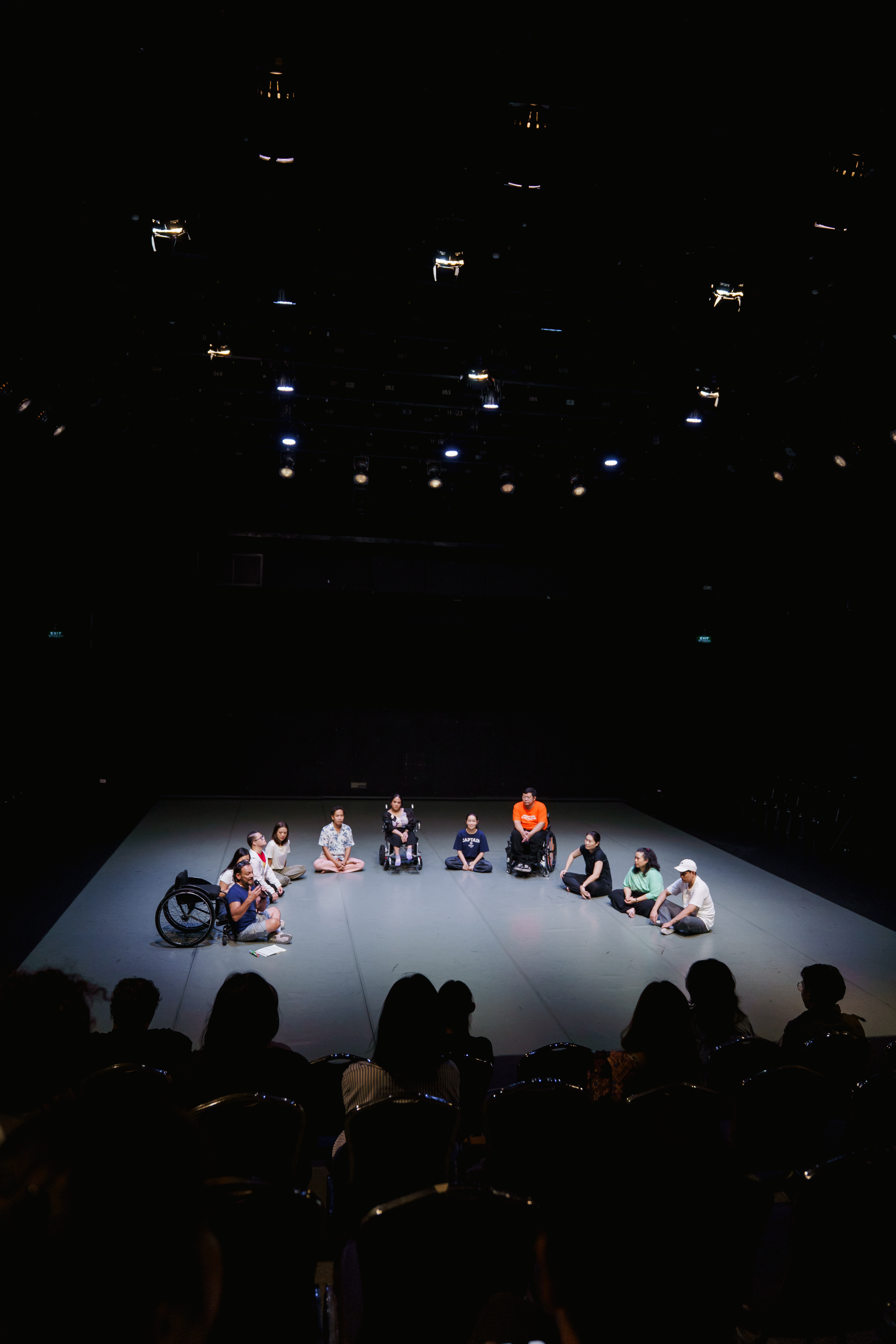
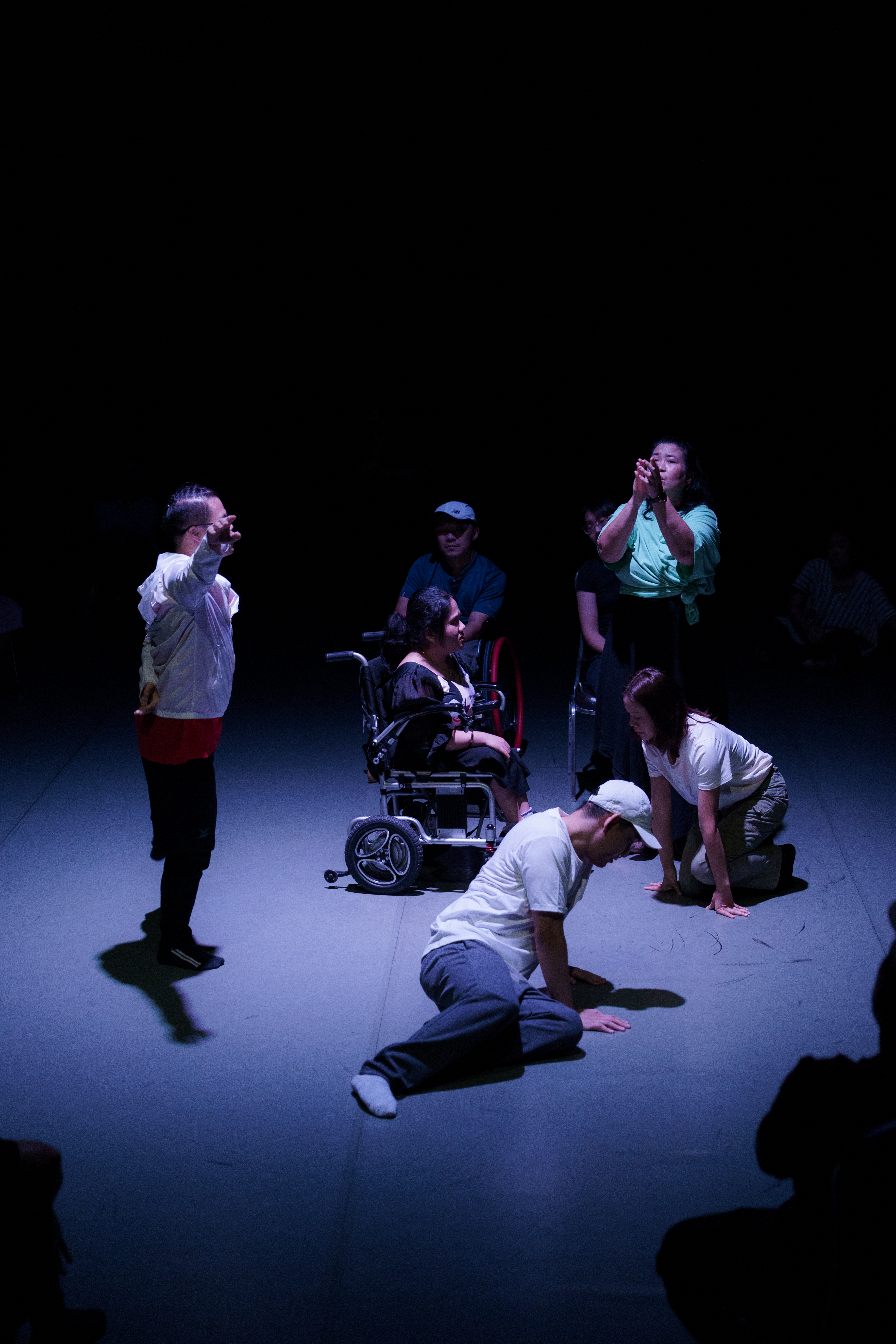
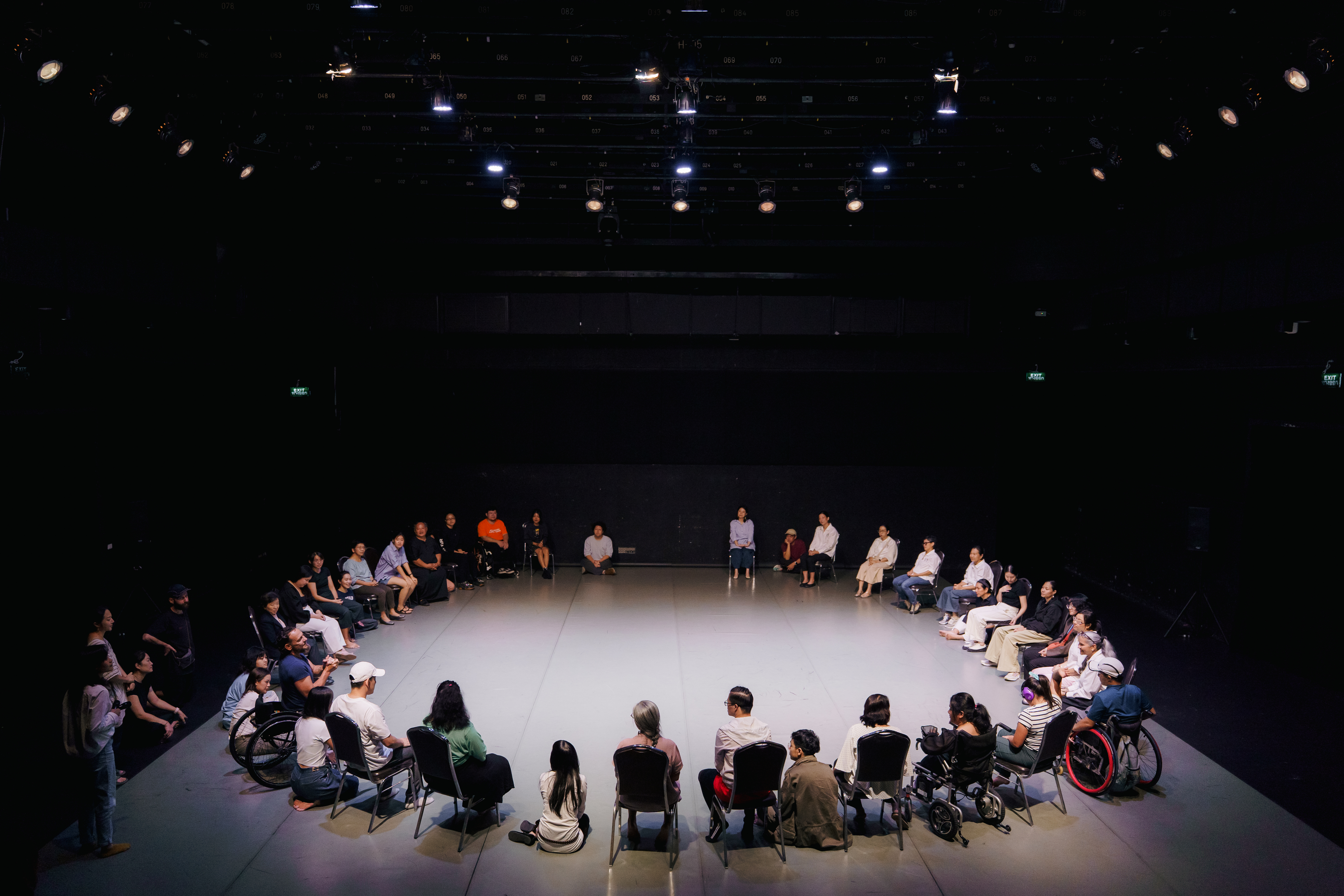
During the In-person process, held at the Sodsai Pantoomkomol Centre for Dramatic Arts at Chulalongkorn University, the artists came together to bring theory to life. The residency was solid yet flexible, adapting to the dynamics of the group, encouraging collaboration right from the start.
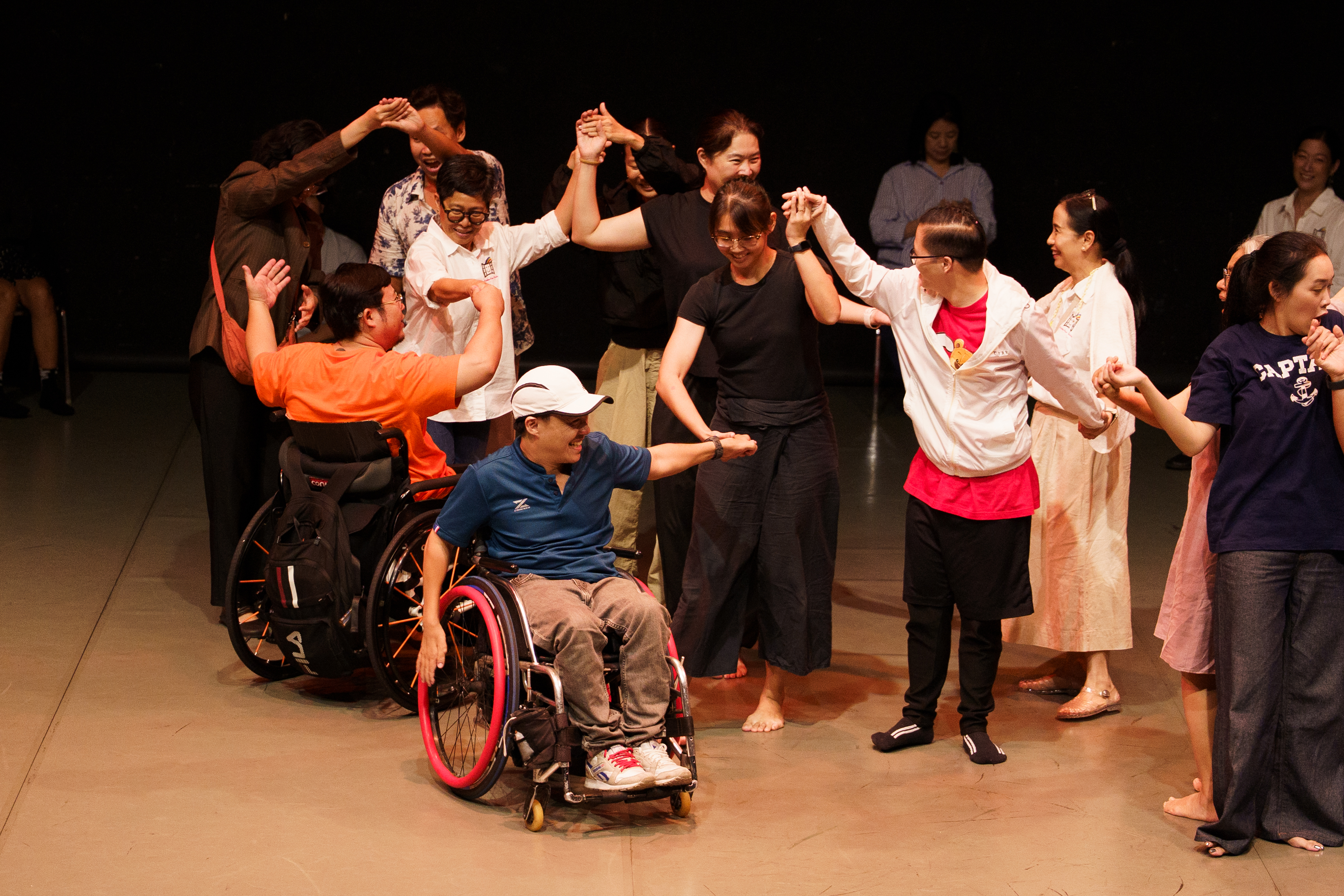
This approach reflected a core principle of inclusive work: responding to the specific group or community and identifying what is needed so that everyone has equal access as creative artists. Through grounding exercises, games, tasks, and problem-solving activities, the participants worked collectively to open up new possibilities.
Although most participants already knew each other, many had never worked together in this way before. By the end of the week, they expressed a strong sense of creative nourishment and a deeper understanding of inclusive processes. Their feedback showed they felt inspired to carry these approaches forward. A genuine bond has formed within the group, and conversations about self-initiated projects are already continuing beyond the workshop. It is remarkable what was achieved in just five days.
We are deeply grateful to the Rainbow Room Foundation for their guidance on the Thai context, and to the Sodsai Pantoomkomol Centre for Dramatic Arts for providing an accessible, well-equipped space that perfectly supported the process.
This is only the beginning, and to build further on work as sensitive as this, time and funding are key. Connections Through Culture is a wonderful opportunity to experiment between UK artists and those from other countries, and to get to know each other through real action. When it works well, it can be even more valuable as a springboard for continuing collaborations.
 Daryl Beeton Productions